
The Definitive Guide to Cloud Storage: Official Platforms vs. Modded Files, System Optimization, and Digital Safety
Digital management relies heavily on robust backup solutions. As smartphones record high-definition videos, shoot high-resolution photos, and download massive asset files, localized physical memory chips fill up faster than ever before. For a long time, the only way to avoid buying a brand-new device was to manually move private memories to an external physical drive or pay continuous monthly platform subscriptions.
The entry of foreign utility apps shifted this balance by introducing incredibly high baseline capacities without cost. Millions of mobile users began utilizing these spaces to manage active device storage limits. However, the contrast between official releases on a marketplace and unauthorized application files available on third-party forums introduces deep digital trade-offs.
This comprehensive guide breaks down file structure mechanics, step-by-step mobile maintenance protocols, operational comparisons, and systemic data security metrics.
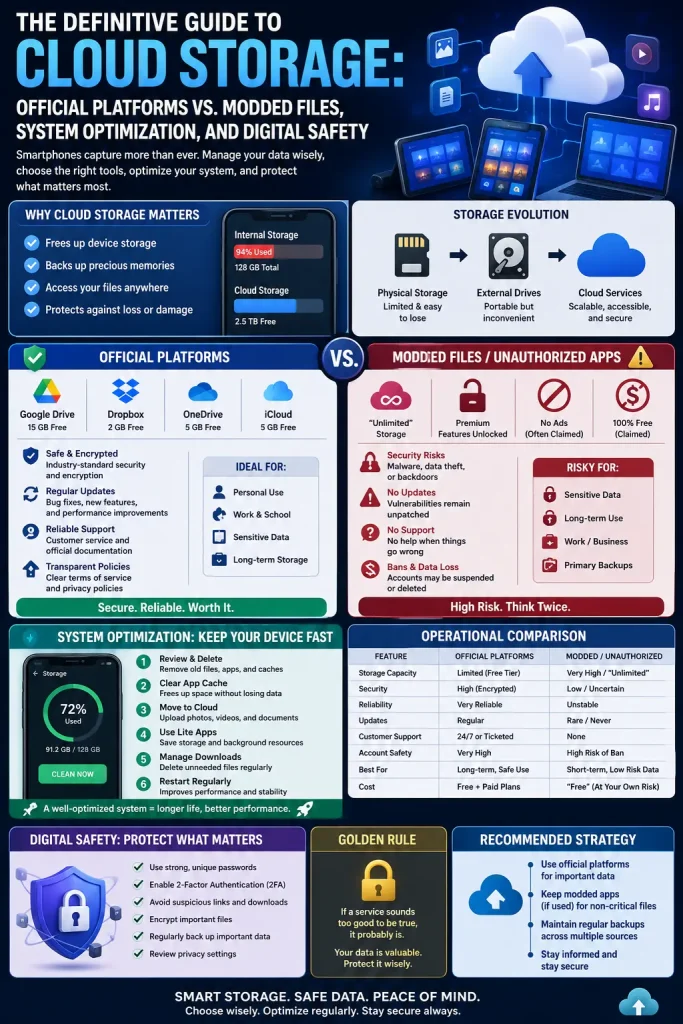
Understanding Cloud Storage Architecture
Cloud-based file hosting operates over a decentralized network of physical data warehouses. When an asset uploads from a smartphone, the local interface changes the file into data packets. These packets travel via secure web layers to physical servers located around the world.
The Role of Tiered Storage
Mainstream providers balance operations by using tiered capacity structures. This format limits baseline users to a few gigabytes before requiring recurring monthly payments. For example, standard services look like this:
- Google Drive: Supplies a 15GB introductory ecosystem shared across Gmail, Workspace tools, and photo albums.
- Apple iCloud: Provides iOS users with 5GB of default storage, moving quickly into paid tiers.
- Microsoft OneDrive: Sets a standard 5GB limit for desktop and mobile document synchronization.
When a digital platform breaks this pattern by offering 1024GB (1 Terabyte) of free space permanently, it alters user expectations. However, managing a massive file repository changes how the app interacts with operating systems, third-party modification packages, and system cache modules.
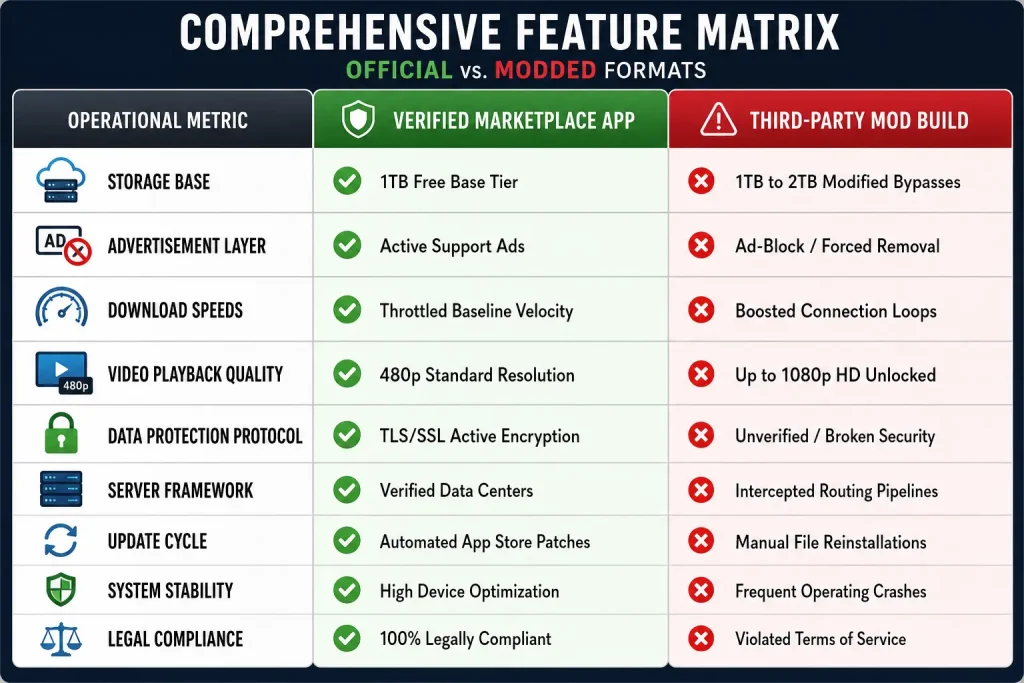
Comprehensive Feature Matrix: Official vs. Modded Formats
The core infrastructure of an application handles your personal files differently depending on its build source. Modified application files (.apk packages) try to alter client-side performance, but they bypass critical server protections in the process.
The following comparative table breaks down these technical differences:
| Operational Metric | Verified Marketplace App | Third-Party Mod Build |
|---|---|---|
| Storage Base | 1TB Free Base Tier | 1TB to 2TB Modified Bypasses |
| Advertisement Layer | Active Support Ads | Ad-Block / Forced Removal |
| Download Speeds | Throttled Baseline Velocity | Boosted Connection Loops |
| Video Playback Quality | 480p Standard Resolution | Up to 1080p HD Unlocked |
| Data Protection Protocol | TLS/SSL Active Encryption | Unverified / Broken Security |
| Server Framework | Verified Data Centers | Intercepted Routing Pipelines |
| Update Cycle | Automated App Store Patches | Manual File Reinstallations |
| System Stability | High Device Optimization | Frequent Operating Crashes |
| Legal Compliance | 100% Legally Compliant | Violated Terms of Service |
Core Technical Features of Modern Hosting Platforms
A high-capacity file utility does more than just hold static assets; it runs real-time system tasks to keep files accessible across multiple environments.
1. Multi-Device Sync Engines
Advanced platforms use background sync frameworks to mirror changes instantly across different hardware profiles. When you add an image or update a document via an Android device, the background engine pushes that asset to the active data center partition. The file can then be opened immediately from a desktop browser, a tablet client, or an iOS device. This design relies on active API hooks that maintain constant communication with server endpoints.
2. AI-Driven Discoverability and Search
Searching through a 1TB storage vault manually is highly inefficient. Modern platforms integrate client-side and server-side machine learning models to analyze file metadata.
If a user inputs a partial filename or search keyword, the localized search index reads string matches instantly. Some systems go a step further by using machine learning models to scan visual content, sorting image libraries automatically by location, objects, or dates without human input.
3. Biometric Security Closets
To keep data safe from unauthorized access on local devices, platforms build separate encrypted local folders. These spaces—often called Personal Vaults—require unique four-digit access codes or direct biometric validation (like hardware fingerprint scans or facial recognition) before decrypting the file keys. This secondary layer ensures your most sensitive files stay secure, even if someone else unlocks your phone screen.
Step-by-Step Android System Fixes & Marketplace Optimization
When managing third-party modifications or large file utilities, operating systems often run into installation errors, mismatched certificate flags, or file access blocks. The most frequent system error notification states: “Download premium unlocked on Google Play, or clear the cache of Google Play.”
This error happens when your device’s package manager reads conflicting installation markers between a verified store listing and an external app package. To clear this systemic conflict, use the exact maintenance steps below.
Phase 1: Cleaning Google Play Store Corrupted Memory
Clearing out cluttered temporary cache configurations forces your device’s app store to re-verify its installation permissions.
- Unlock your Android device and launch the master Settings app from your home screen or notification tray.
- Scroll downward until you locate the Apps, Applications, or App Management sub-menu.
- Tap on the list entry labeled See All Apps or select the application search icon.
- (Optional for certain OS variations): Tap the top-right Three Vertical Dots (⋮) and click Show System Apps to display core platform modules.
- Scroll through the alphabetical list to find and select the Google Play Store.
- Inside the application info screen, tap on the Storage & Cache setting partition.
- Tap the Clear Cache icon. The button will turn gray or show zero bytes used, confirming the temporary cache layer is clean.
- Next, tap Clear Storage or Clear Data. A warning pop-up will ask you to confirm this step. Tap Delete or OK.
- Note: Clearing this data resets your internal app store settings—such as parental controls and auto-update rules—but it will not touch your installed apps or account profiles.
[Settings] ➔ [Apps] ➔ [Google Play Store] ➔ [Storage & Cache] ➔ [Clear Cache & Data]
Phase 2: Resetting Google Play Services Environment
Google Play Services manages background security, account verification, and license checks across your device. If this subsystem gets out of sync, external apps will crash during installation.
- Go back to your master Apps or App Management settings directory.
- Scroll through the list and select Google Play Services.
- Tap on the Storage & Cache settings option.
- Click the Clear Cache icon to clean out background connection data.
- Tap on the Manage Space or Clear Storage configuration toggle.
- Select the option labeled Clear All Data at the bottom of the interface.
- Confirm the security prompt by tapping Delete or OK.
Phase 3: Finalizing Device Re-Registration
- Exit your device settings dashboard entirely.
- Press and hold your physical Power Button until the power menu shows up on your screen.
- Tap the Restart or Reboot button.
- Allow your phone to reboot fully. This action forces the operating system to spin up a clean database log for app verification.
- Launch the official Google Play Store app and re-accept the platform Terms of Service to re-establish your encrypted connection loop.
The Critical Security Risks of Unofficial “Mod APK” Packages
Using modified file versions, such as packages tagged with legacy crack codes like “94fbr”, poses severe risks to your mobile device and data security. These modified packages alter compiled source code to bypass payment steps, creating massive holes in your personal security in the process.
1. The Reality of Data Exploitation
Official cloud applications use end-to-end transport layer security (TLS) to encrypt your assets as they move from your phone to the remote data server.
When a third-party developer modifies an app package, they can easily change these network targets. This means your private files, account logins, and automated photo backups can be secretly copied and routed directly to unauthorized servers without your knowledge.
2. Background Spyware and Hidden Trojans
Modified installer packages (.apk files sourced over random web browsers) frequently act as delivery vehicles for malware.
Because these files are installed outside the automated security checks of the official app store, they can quietly insert background scripts into your phone. These scripts can capture keystrokes, intercept online banking details, steal multi-factor SMS authentication codes, or use your device hardware to mine cryptocurrency in the background.
Third-Party .APK ➔ Bypasses App Store Filters ➔ Injects Background Malicious Scripts ➔ Compromises Private Device Data
3. Immediate Account Restrictions and Data Loss
Cloud hosting networks use automated server-side checks to spot tampered application versions.
If a modified app bypasses standard download limitations or alters ad delivery scripts, server-side filters quickly pick up the abnormal API calls. This results in an immediate account ban, cutting you off from the service permanently and wiping out every photo, video, and document you had backed up in that account.
4. Zero Support and Manual Maintenance Hassles
Official app store versions update automatically in the background to patch new security exploits and optimize battery use.
Mod builds, however, cannot communicate with official update servers. They require you to manually find, download, and install a brand-new untrusted package every single week just to keep the app from crashing. On top of that, you lose access to official customer help desks if your files get corrupted or lost.
Secure Alternative Approaches for Storage Management
If you run out of local space but want to avoid the risks of modified apps, you can easily optimize your digital storage using secure, built-in methods.
1. Manual Cache Management for Desktop and Mobile Browsers
Applications like WhatsApp, web browsers, and social media platforms pile up gigabytes of hidden junk data inside your local storage files over time. Clearing this temporary clutter frees up space without sacrificing important personal photos or system safety.
- For Google Chrome Mobile: Open Chrome ➔ Tap the Three Dots ➔ Settings ➔ Privacy and Security ➔ Clear Browsing Data ➔ Check Cached Images and Files ➔ Clear Data.
- For Global Social Apps: Open System Settings ➔ Apps ➔ Select target app (e.g., TikTok, Instagram) ➔ Storage ➔ Tap Clear Cache.
2. Multi-Platform Cloud Distribution Strategy
Instead of risking your data safety on a single modified app, you can build a secure, zero-cost storage network by combining the free starter tiers of several official providers:
[Your Digital Assets]
├── Photo Memories ──────► Google Photos / Drive (15 GB Free Verified Space)
├── Work Documents ──────► Microsoft OneDrive (5 GB Free Verified Space)
├── Large Video Files ───────► Official TeraBox Client (1 TB Free Verified Space)
By spreading your files across these official apps, you get plenty of secure cloud backup space without ever putting your privacy or your phone at risk.